willie777 Wrote:It is gold because guy is wearing officer cut uniform. But something still puzzles me, why is a pic of a russian soldier there? Russia did not occupy east berlin, soviet union did. Even if it shows a hammer and sickle on the cocarde, the is still a russian flag sleeve patch. Couldnt they have just gotten some 100% soviet uniforms from the warehouses to dress the guy?
From the lack of chest pockets, I surmise that the uniform is Soviet pattern. As such, the collar style indicates that it is not an officer's (non-general) cut uniform -- officer lapels have a "notch" cut, and the collar patches would be oriented differently.
I would guess that they simply took photos of actual, representative soldiers from both American and Russian armies at some point after reunification, and that was the how the uniforms looked at the time.
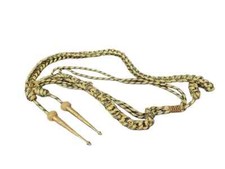
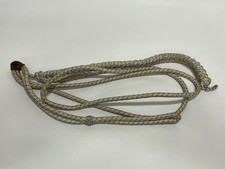
Here are some pictures of
akselbanti from my own collection. They came already attached to the uniforms.
The silver one was on a musician praporschik's parade coat, officer's cut (no silver stars on the woven shoulderboards to indicate specific rank).
The gold one was attached to a state security conscript private's parade coat, which is officer's cut. The "medals" were a mishmash of suspensions with typical
znatchki devices, so those were probably thrown on to jazz up the sale.
Judging from all the examples we've seen, the uniform cut and adornments were often chosen to fit the occassion per the commander's instructions. The only things that couldn't be messed with were personal awards and ranks ... you don't put an officer's shoulderboard's on a conscript, etc.
willie777 Wrote:In the US, some people wear them on both shoulders. If an infantryman is also an aide to a general, hw wears an infantry blue shoulder cord over his right shoulder and a gold aiguillette over his left. Also, at my local JROTC (Junior Reserve Officer Training Corps), some cadets wear one cord over each shoulder.
In the US Army, there are shouldercords, aiguillettes, and fourragères. The first indicates branch -- only the infantry uses it as part of the normal uniform, other branches have used them for honor guards, but their wear is no longer authorized. The second indicate function -- as you mentioned, aides-de-camp wear gold aiguillettes, but stop wearing them once they leave that billet. The third are decorations bestowed by foreign governments (French Fourragere; Belgian Fourragere; Netherlands Orange Lanyard) on the organization as a whole (regiment, brigade, army, etc) -- once someone leaves the unit, its wear is no longer authorized.
The 3rd Infantry ("Old Guard") in Washington, DC wear wear a black-and-tan "buff strap" on their left shoulder, which is a replica of the knapsack strap used back in the 1800's. When on ceremonial duty they all wear the blue infantry cord and disks as well, regardless of MOS, for uniformity.
In the case of ROTC, both junior and senior, the cords and aiguillettes indicate membership in such things as color guards, honor societies and associations. Since they are supervised and administered by active duty and retired military personnel, the wear closely follows authorized military practices, but since they are meaningless beyond the ROTC, there is sometimes leeway given by Cadet Command.
What bearing this has on Soviet wear of
akselbanti? None. But they seem to be constructed to be worn from the right shoulder only. So it is highly unlikely a Soviet soldier or officer ever wore cords from the left or both shoulders.