07-01-2004, 12:45 AM (This post was last modified: 07-01-2004, 12:50 AM by d-riemer.)
As a design engineer who worked many years in manufacturing, I am always interested in manufacturing processes and in the conflicts that occur between design and manufacturing.
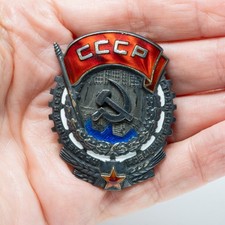
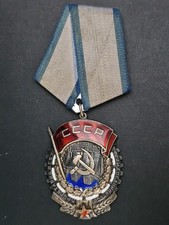
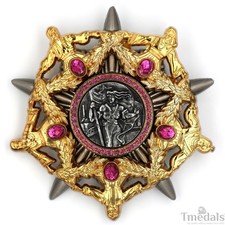
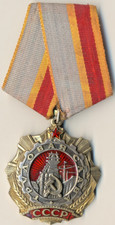
Here are three versions of the Peoples Order of Labor that illustrate the development of a manufacturing process. The designer had the idea of combining the Soviet star with a background containing rays that emanate from the star. The order would be made from two metal parts of different color as required for the three classes of the order, glued together with an epoxy-type resin.
The prototype (shown also in Petko Pavlov's book) seems to be made from machined components with a very tight fit. The manufacturing engineers apparently had to change the base to allow for a wider tolerance of stamped components. The initial base was thin and not satisfactory. They ended up using the modified design of the base and a base thickness that exceeded even that of the prototype. (The Bulgarians seem to associate weight and importance of an order. Most of their highest orders are heavy!)
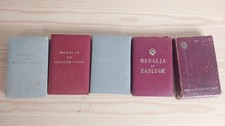
What persuades you to think these orders are unissued? Unfortunately most Bulgarian orders weren't numbered after around 1960, These orders look to be the 2nd variation of the 3rd type of the order (Small Kolodka) so they are the very last variation of this award. People's Order Of Labour were never numbered and two classes (4th and 5th) were never even issued. This order was originally issued with male and female ribbons (as Tsarist Bulgarian awards) and was the very first award created after communist coup of 9th September 1944. The ribbon was also reversed some time soon after the transition of a triangular ribbon to a kolodka.
This happens quite frequently with Bulgarian awards, many labour awards were handed out and the recipient was never expected to wear them. I have very few Bulgarian awards showing wear of any sort. I have a documented group of 15 medals and only 1 of them looks like it has ever seen daylight. If you were a civilian (and also very frequently if in a military role) the necessity to wear your awards was minimal. Unlike with Soviet awards Bulgarian (People's Republic) awards never saw action and the vast array of orders and medals and badges were issued for non-combat related actions. A reserve officer could have a chest full of medals without ever firing a weapon. With the variation of People's Orders Of Labour you have there which is probably from the last handful of years of the communist regime whoever was issued with the awards will never had a chance to wear them and they will have probably seen as much action in the hands of someone who had been awarded them as they would if they had remained in the warehouse. If it's not out of the question could I enquire when you purchased this set and how much of a bargain you got? They're something a little different but because of the alloy used they don't taste very good!:D
CtahhR Wrote:If it's not out of the question could I enquire when you purchased this set and how much of a bargain you got? They're something a little different but because of the alloy used they don't taste very good!:D
I bought them for $34 (including shipping to my country) in 2006. However I do not have them anymore, because I now focus my collection on Soviet and Yugoslavian awards with some East German medals. I stopped buying medals from all the countries of the Eastern Bloc.
It must also be noted that these "new" Orders Of Labour not only had a more distinct colour system but they also were named "Gold, Silver, Bronze" unlike the confusing predecessors.
On the subject of Bulgarian production and sizes, there can be vast and noticeable difference in thickness, size and weight of most Bulgarian awards. A study on the Medal "For Military Merit" will open some eyes on the subject after I get the callipers out.