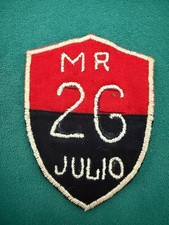
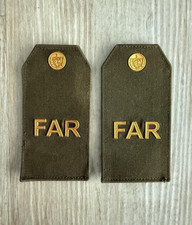
03-12-2008, 08:27 PM
The 26th of July Movement was the revolutionary organization planned and led by Fidel Castro that in 1959 overthrew the Fulgencio Batista government in Cuba. The 26th of July Movement fought Batista on both rural and urban fronts.
Frank País was a key organizer within the urban underground movement.
In the summer of 1955, País’ organization merged with the July 26 Movement (M-26-7) of Fidel Castro. País became the leader of the new organization in Oriente province.
Up to this moment neither the police in Santiago nor the group members themselves knew the extent of the organization País had so painstakingly built. Then one day in early 1956 each cell was given the order to paint the name of the movement along with slogans against the tyranny on all the walls and buildings in their neighborhood. The next morning, the army, the police, and the people of Santiago awoke to the magnitude of the resistance. Every block in the city was covered with writing splashed in paint; “Down with Batista! M-26-7.” No one had been arrested.
Toward the end of that year, the movement began to prepare for the armed uprising that would cover Castro’s landing in Cuba and entrance into the mountains.
The 26th of July Movement's name originated from the failed attack on the Moncada Barracks, an army facility in the city of Santiago de Cuba, on July 26th, 1953. The movement was reorganized in Mexico in 1955 by a group of 82 exiled revolutionaries (including Fidel, his brother Raúl Castro, Camilo Cienfuegos, and the Argentinian Che Guevara). Their task was to form a disciplined guerrilla force to overthrow Batista.
On December 2, 1956, 82 men landed in Cuba, having sailed in the boat Granma from Tuxpan, Veracruz, ready to organize and lead a revolution. The early signs were not good for the movement. They landed in daylight and were attacked by the Cuban Air Force, killing most of those who landed. The landing party was split into two and wandered lost for two days, most of their supplies abandoned where they landed. Of the 82 who sailed aboard the Granma, only 16 eventually regrouped in the Sierra Maestra mountain range. There they encountered the Cuban Army. Guevara was shot in the neck and chest during the fighting, but was not severely injured. (Guevara, who had studied medicine, continued to give first aid to other wounded guerrillas). This was the opening phase of the war of the Cuban Revolution, which continued for the next two years. It ended in January 1959, after Batista fled Cuba on New Year's Eve when the movement's forces marched into Havana.
After Castro gained control of Cuba, the 26th of July Movement was joined with other bodies to form the United Party of the Cuban Socialist Revolution, which in turn became the Communist Party of Cuba in 1965.
The so-called Integrated Revolutionary Organizations (ORI) was formed in July 1961 by the merger of the Revolutionary Movement July 26th (MR-26-7, led by Fidel Castro), the People's Socialist Party (PSP, communist, led by Blas Roca) and the Revolutionary Directory March 13th (led by Faure Chomón). The ORI became on 26th March 1962 the United Party of the Cuban Socialist Revolution (PURSC), which converted into the Communist Party of Cuba (PCC) on 3rd October 1965.
The flag of the 26th of July Movement is on the shoulder of the Cuban military uniform, and continues to be used as a symbol of the Cuban revolution.
Everybody's equal, But some more than others!
"Those who come to us with the sword - will be killed by the sword" - Alexander Nevski
"Those who come to us with the sword - will be killed by the sword" - Alexander Nevski