12-22-2009, 09:51 PM
Record card
Order booklet nr. A-407066
1. Last name: Biryukov
2. First name and patronymic: Yuri Dmitriyevich
3. Military rank: Major
4. Sex: Male
5. Year of birth: 1922
6. Place of birth: Smolensk Oblast, Jartsevo Raion, village of Volkovo
7. Party membership (since which year): Since 1944 member of the VKP(b)
8. Education: 10 classes
9. Nationality: Russian
10. Since which year in the Red Army: Since 1941
11. Place of service (name of unit) and duty position at the time of the awarding: [?] [?] [?] [?]
12. Current Place of service and duty position: [?] [?] [?] [?]
13. Home address of the awardee: City of Lvov, Kleparovskaya Street, house 22
14. Record of all awards presented:
Award sheet
1. Last name, first name and patronymic: Biryukov, Yuri Dmitriyevich
2. Military rank: Senior Lieutenant
3. Duty position, unit: Commander of a 120mm mortar battery in the 7th Rifle Regiment, 24th Rifle Division
Recommended for: Order of the Red Star
4. Year of birth: 1922
5. Nationality: Russian
6. Party membership: Candidate-member of the VKP(b)
7. Participation in the Civil War, the following combat actions for the defense of the USSR, and the Patriotic War (where, when): From 10 March 1942 with the Kalinin, Stalingrad and Don Front
8. Suffered wounds or contusions in the Patriotic War: No
9. Since when in the Red Army: Since 1941
10. Drafted by which RVK: City of Leningrad
11. Which earlier awards (for which merits): Not awarded
12. Permanent home address of the recommendee and the address of his family: City of Leningrad, [?] 44, Flyugov Street, house nr. 5. Mother: Nina Georgiyevna
Short, concrete description of personal combat feat or merits:
While at the command post during the fighting on 26 December [should be November, AdV] for height 204.0, Southeast of Kiyelekovo, under enemy fire, he skillfully and personally corrected the fire of his battery, destroying two enemy artillery batteries, two heavy machine guns, and up to 50 Hitlerites, interfering with our troops' advance to the height.
The personnel and materiel are prepared excellently for fulfilling the most difficult tasks in combat situations.
He deserves the state award "Order of the Red Star".
Commander of the 7th Rifle Regiment
Senior Battalion Commissar /Kuyarov/ [signature]
Chief of staff
Captain /Nikitin/ [signature]
16 December 1942
Deserves the state award "Order of the Red Star".
Commander of the 24th Rifle Division
Colonel [signature] /Prokhorov/
Awarded the Order of the Red Star by Order of the 24th Rifle Division nr. 05/N of 23 December 1942.
Chief of the 4th section
Captain [signature] /[?]/
Order booklet nr. A-407066
1. Last name: Biryukov
2. First name and patronymic: Yuri Dmitriyevich
3. Military rank: Major
4. Sex: Male
5. Year of birth: 1922
6. Place of birth: Smolensk Oblast, Jartsevo Raion, village of Volkovo
7. Party membership (since which year): Since 1944 member of the VKP(b)
8. Education: 10 classes
9. Nationality: Russian
10. Since which year in the Red Army: Since 1941
11. Place of service (name of unit) and duty position at the time of the awarding: [?] [?] [?] [?]
12. Current Place of service and duty position: [?] [?] [?] [?]
13. Home address of the awardee: City of Lvov, Kleparovskaya Street, house 22
14. Record of all awards presented:
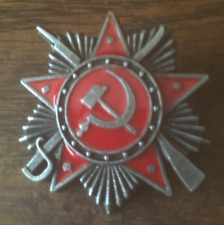
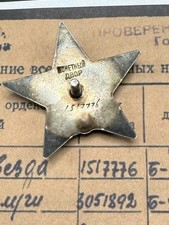
- Order of the Red Star #76347, Order of the 24th Rifle Division of the Don Front nr. 05/N of 26 December 1942
- Order of the Red Star #560632, Order of the 350th Rifle Division nr. 08/N of 25 January 1944
- Order of the Red Banner #132126, Order of the commander of the artillery of the 1st Ukrainian Front nr. 1081/N of 29 August 1944
- Order of Aleksandr Nevsky, #40151, Order of the commander of the artillery of the 13th Army nr. 32/N of 1 June 1945
- Medal for Combat Merit, Unnumbered, Decree of the Supreme Soviet of the USSR of 19 November 1951
- Order of the Red Star #3542501, Decree of 30 December 1956
- Medal for the Capture of Berlin, Decree of the Supreme Soviet of the USSR of 9 June 1945
- Medal for the Victory over Germany, Decree of the Supreme Soviet of the USSR of 9 May 1945
- Medal for 30 Years Soviet Army and Fleet, Decree of the Supreme Soviet of the USSR of 22 February 1948
Award sheet
1. Last name, first name and patronymic: Biryukov, Yuri Dmitriyevich
2. Military rank: Senior Lieutenant
3. Duty position, unit: Commander of a 120mm mortar battery in the 7th Rifle Regiment, 24th Rifle Division
Recommended for: Order of the Red Star
4. Year of birth: 1922
5. Nationality: Russian
6. Party membership: Candidate-member of the VKP(b)
7. Participation in the Civil War, the following combat actions for the defense of the USSR, and the Patriotic War (where, when): From 10 March 1942 with the Kalinin, Stalingrad and Don Front
8. Suffered wounds or contusions in the Patriotic War: No
9. Since when in the Red Army: Since 1941
10. Drafted by which RVK: City of Leningrad
11. Which earlier awards (for which merits): Not awarded
12. Permanent home address of the recommendee and the address of his family: City of Leningrad, [?] 44, Flyugov Street, house nr. 5. Mother: Nina Georgiyevna
Short, concrete description of personal combat feat or merits:
While at the command post during the fighting on 26 December [should be November, AdV] for height 204.0, Southeast of Kiyelekovo, under enemy fire, he skillfully and personally corrected the fire of his battery, destroying two enemy artillery batteries, two heavy machine guns, and up to 50 Hitlerites, interfering with our troops' advance to the height.
The personnel and materiel are prepared excellently for fulfilling the most difficult tasks in combat situations.
He deserves the state award "Order of the Red Star".
Commander of the 7th Rifle Regiment
Senior Battalion Commissar /Kuyarov/ [signature]
Chief of staff
Captain /Nikitin/ [signature]
16 December 1942
Deserves the state award "Order of the Red Star".
Commander of the 24th Rifle Division
Colonel [signature] /Prokhorov/
Awarded the Order of the Red Star by Order of the 24th Rifle Division nr. 05/N of 23 December 1942.
Chief of the 4th section
Captain [signature] /[?]/