10-27-2006, 07:20 PM
Soviet Wrote:Magic fingers.
The Harry Potter approach. Clever


 Scanner Recommendations
|
Scanner Recommendations
|

10-27-2006, 07:20 PM
Soviet Wrote:Magic fingers. The Harry Potter approach. Clever

10-28-2006, 08:41 PM
Dave,
Slim scanners are terrible at scanning 3D objects, so go for something bigger. HP scanners are good, but I am not too happy with their software. When shopping for a scanner ask them to scan your watch, and see how it turnes out. Alexei 
03-28-2007, 01:07 PM
Is someone in the Forum using this scanner ?
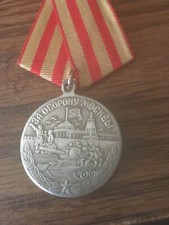
Can this scanner scan 3D objects, such as medals or screwback orders ? Many thanks in advance. Cheers. Ch. 
03-28-2007, 01:25 PM
I had an Epson CX3200, so it's not the same model, but it scanned medals *great*. Real nice images. So maybe Epson does this job well, generally.
The new scanner I got, an HP, is strictly 2 dimensional.  I checked Amazon and epinions and no reviews there mention 3-d issues. Unless someone here has one be preared to buy it, install it, run a test scan or 10, and then return it if it doesn't do what you want. I'd guess that for $100+/- you're going to get what ya paid for. :/
"patina imparts character" - PJS
A wise man said: 'you should not pay a premium for what you want beyond your comfort level, and always ensure there is a mutually agreeable return policy.' 
03-28-2007, 01:44 PM
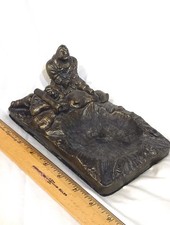
When using ANY scanner, the problem you're going to run into is "depth of field"- there is no way to adjust the aperature of the scanning lens, which scans wide open. The focus is set to the glass of the scanning window. Any part of the object you're scanning that is away from the glass will begin to fall out of focus. The degree of "out of focus" will depend on the depth of the object itself and the lens in the scanner.
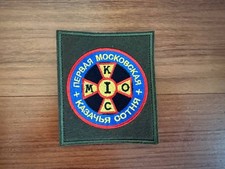
I've had pretty good results with flat medals, pins and badges, embroidered patches and the like on scanners- some so thick that I had to remove the door of the scanner and cover with a dark cloth during the scanning process. BUT, when objects got too thick, I had to go the camera route. Best to have both options if possible.
"We are Marching for the Victory of Communist Labour"
V.I. Ulyanov (Lenin) 
03-28-2007, 03:21 PM
Christophe,
There are basically 2 types of flatbed scanners: CCD scanners, and real optical scanners. CCD scanners are compact, light, cheap, and do a good job with strictly flat objects. Optical scanners are usually bigger, heavier, and more expensive, but the output is of higher quality; their specificity is their ability to scan beyond simply the plane of the scanner plate. Now, how much will the depth of field be will vary from model to model, from 1cm up to about 5cms; beyond that, the image becomes blurry. Marc 
03-28-2007, 04:42 PM
(This post was last modified: 03-28-2007, 05:40 PM by jefflgarrison.)
That was the question my wife posed as she walked in on me doing the little test of my scanners ability with 3D.
It is a Plustek OpticBook 3600 that sells for about $250. Is fantastic for scanning printed material, btw. Here is an example of it's capability. I highly recommend it for a variety of things. It is rugged enough for heavy scanning. However, I didn't put it to the test by sitting on it since I way a bit more than I think the plastic case and glass top can handle.:laff Oh, and btw, this is a great example as to why the "Shroud of Turin" is suspect. Notice the glasses. The ear pieces are not bent out like that. It actually made my face seem thicker than it is.
03-28-2007, 05:57 PM
Nice shot Jeff!!!!
His image does display a very excellent "depth of field". Are there any numbers in the specs of scanners in general that indicate "depth of field"?
"patina imparts character" - PJS
A wise man said: 'you should not pay a premium for what you want beyond your comfort level, and always ensure there is a mutually agreeable return policy.' |
|
« Next Oldest | Next Newest »
|