10-21-2003, 07:10 AM
The decisions surrounding the establishment of Soviet WWII "battle" medals is, frankly, rather odd.
First, it must be kept in mind that they are campaign medals and not battle medals. That is why, as I have said before, you don't need to have been near the actual named city to be eligible for an award.
Two medals are clearly named for campaigns - Arctic and Caucasus, or three if you count V over Japan. The rest are named for cities but primarily deal with campaigns. Thus Berlin can be thought of as Germany, Warsaw as Poland, Budapest as Hungary etc.
The problem here is that some minor and even some major campaigns seem to be left out.
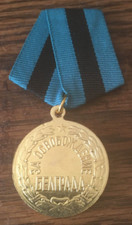
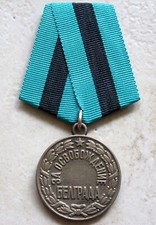
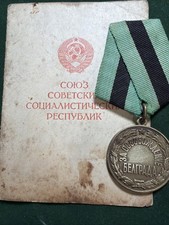
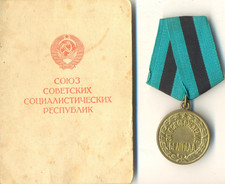
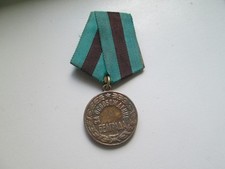
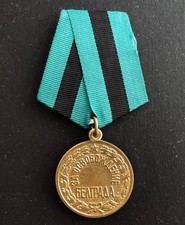
Belgrade can be taken as an award to the 4th Ukrainian Front, not just for the actions in Yugoslavia including around Belgrade, but also for their drive through Moldova, Romania, limited actions in Bulgaria, and then a swing back north into Hungary. Without Belgrade most of the 4th Ukrainian Front would not have been eligble for any of the liberation/seizure medals.
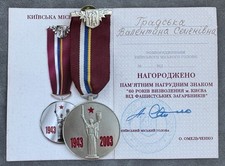
Kiev was left out till the 1960s. This is understandable given the fact that there was little to be proud of regarding the defence of Kiev or the first several atepts to liberate the area. The medal was introduced under Krushchev who "fought" there and tried to enhance his reputation.
The great mystery to me is why there was never anything for Kursk or Minsk/Belorussia. Both were major Soviet successes.
Anyway, I don't think you are right Bob that the RKKA was medal happy. Few who got Belgrade (aside from pilots) added it to anything else. It was not like they were adding medal #5 or anything to the average soldier. If you look at an avarge of medals per days or miles or battles fought then the average Red Army soldier or officer has far, far, far fewer medals than the rest of the allies.
Shawn
PS For the liberation of Belgrade itself and the actions south and west of the city the Danube river foltilla played a huge and key role and were thus all eligible for the medal.
PPS People forget that some successes owe more to the planers than the fighters. The biggest success of the Campaign against Japan in Manchuria was the absolute record setting (still standing to today) movements for comat capable mech/motor units. Planners of that received, rightly, major Orders.
Shawn