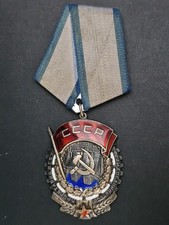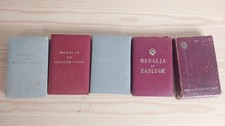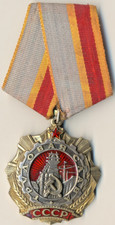


As a design engineer who worked many years in manufacturing, I am always interested in manufacturing processes and in the conflicts that occur between design and manufacturing.
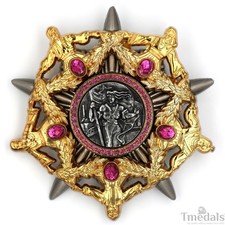
Here are three versions of the Peoples Order of Labor that illustrate the development of a manufacturing process. The designer had the idea of combining the Soviet star with a background containing rays that emanate from the star. The order would be made from two metal parts of different color as required for the three classes of the order, glued together with an epoxy-type resin.
The prototype (shown also in Petko Pavlov's book) seems to be made from machined components with a very tight fit. The manufacturing engineers apparently had to change the base to allow for a wider tolerance of stamped components. The initial base was thin and not satisfactory. They ended up using the modified design of the base and a base thickness that exceeded even that of the prototype. (The Bulgarians seem to associate weight and importance of an order. Most of their highest orders are heavy!)
Dietrich