

07-06-2002, 06:36 AM
(This post was last modified: 07-06-2002, 06:47 AM by W. C. Stump.)
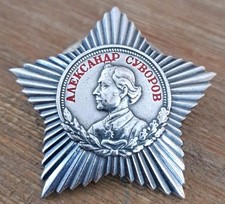
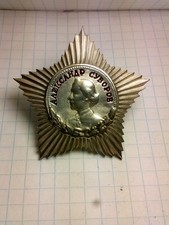
COMPANY COMMANDER AWARDED AN ORDER OF SUVOROV
Mikhail Mikhaylovich Sorokin, house painter and artist, is listed as gunner in his military ID. this record indicates the first military occupational specialty, the most prestigious in the Army, it was made after the war on the basis of the ID owner's service record between 1941 and 1945.
I have never met Mikhail Mikhaylovich, we share no memories, have no common combat friends, yet I understand him immediately because he had been fighting with the infantry.
Before the war the infantry was regarded as the main branch of the armed forces by the Army regulations. The war proved it to be true. On June 22, 1941, the infantry together with frontier units were the first to meet the enemy that stated the war. Raising of the Victory Banner above Berlin is also its fighters' handiwork. Queen of the Fields, our Mother-Infantry required from its sons not so much special technical knowledge as superhuman stamina and bravery, incredible power of endurance. Feats committed by its sons are not always noticeable; they usually lack magnificence and romanticism being stern as the war itself.
The person with whom I am talking is a true infantryman, one of those who are, as they say, able to shave themselves with an awl and warm themselves with smoke. He knows what soldier's blood and a handful of ammunition really is really worth. He appreciates the actual value of the infantry shovel which novel writers in their dilettantish way often call "small sapper spade".
Sorokin participated in his first fight as a member of the 1st Guards Division of the Leningrad Militia. The re-training of Mikhail Sorokin, turner of Voroshilov plant, for a machine-gunner did not take long. The enemy was no interval between explanations given by an instructor and baptism by fire. The enemy was on the approaches to the city of Leningrad, and on August 11th, Private Sorokin dug his first trench near the village of Moloskovitsy.
A machine-gun is the infantry's most powerful weapon and the main target for the enemy. Sorokin became aware of this fact from the first minute of the fight when next to him his fellow machine-gunner fell dead burring his nose in the ground and when his Maxim machine-gun overwhelmed the attacking fascists.
As the common expression says, a fighter needs to smell gunsmoke to acquire some combat expertise. Throughout the war Sorokin smelt gunpowder except for several "breaks" in the hospital where he recovered from wounds. For the first time he was wounded, in the hip, while defending Leningrad. he was put in a hospital and evacuated to the rear. After convalescence he was enlisted to a regimental school where he received sergeant training. Someone noticed that the former worker from Leningrad had good commanding skills, his excellent school results also played a positive part. Therefore, he was sent to the junior lieutenant training classes. After finishing the classes he rejoined the front troops.
I have an article cut from a front newspaper. It is entitled "Becoming a Member of the Communist party." It read, "Junior Lieutenant Sorokin, platoon commander, recently received his Communist party membership card. He deserves to hold this high title. He justified it when fighting on the front against the German invaders. the Motherland highly honored his combat exploits by awarding him with the Order of the Red Star."
On April 9th, 1944 Sorokin was wounded for the second time as an explosive bullet hit him in the face. He thinks that he was lucky to get off pretty easy. After another stay in the hospital he returned to his platoon. That's all, but there are still tiny fragments of that bullet is in his flesh under the scars, iron wartime souvenirs, traces of the bitter soldier's "luck".
Soon after returning to his unit he took command over the company. Now he had more subordinates under his command and a wider sector of the front-line in which to advance. He had more duties and less rest. the company just like the platoon doesn't have any rear; all men from company commander to orderly fight in the same trench when maintaining defense and move in the same line during attacks. According to prewar regulations the company commander was to be armed with a revolver, but the war put a machine-gun in his arms.
Sorokin received his second decoration, an Order of the red Banner, for personal courage and valor. There were fights of local importance in the sector of their 60th Division. Our troops were about to launch an offensive.