

02-11-2008, 11:03 AM
29.NCOs and privates, who are permanent employees of the auxiliary services of the military schools of the Soviet Army (patrols, guards etc.) wear:
- In branch military schools – uniforms, shoulderboards, collar tabs and emblems of the branch of the school where they serve;
- In military schools of special services (quatermaster, medical, veterinarian) and of Justice service – uniforms, shoulderboards and collar tabs of the motorized infantry.
30.NCOs and privates of the military music bands wear:
- In military units and branch military schools – uniform, shoulderboards and collar tabs of the unit’s or school’s branch, but with music band emblems;
- In military schools of special services – uniforms, shoulderboards and collar tabs of the motorized infantry, but with music band emblems.
31.Serviceman of military units and offices of the Navy for which army uniforms are issued, wear uniform, shoulderboards, collar tabs and emblems according to paragraphs 22-25 of this regulations; Additionally, letters identifying fleet or flotilla are to be added in yellow paint on shoulderboards of NCOs and privates.
32.Officers and NCOs of the military construction units of the Ministry of Defense wear uniforms set for officers and NCOs of the military construction units of the Soviet Army.
33.Way of wearing guard uniforms in the Soiet Army is set by the instruction of garrison and guard services of the Armed Forces.
34.For Marshals, generals, admirals and officers it is acceptable to wear:
– Khaki shirt (cream shirt in the Navy) with soft shoulderboards without jacket with trousers or breeches – when out of formation in unit’s perimeter, on ship’s deck, when working in HQs, offices, institutions, on airports and during air flights;
– Overcoat with summer uniform at low temperature, in this case, wearing scarf is not obligatory;
– Rain cape at rainy weather – during maneuvers, field trainings and out of formation;
– Visor cap instead of winter headwear – in wintertime out of formation;
– Civilian clothes – in service-free time.
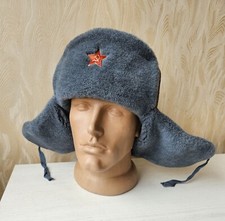
35.For officers (except for colonels) it is acceptable to wear ushanka cap made of gray (in the Navy – black) astrakhan with winter parade walking out and everyday uniforms out of formation.
36.For female officers of HQs, hospitals and other military institutions it is acceptable to wear civilian dress on service.
For admirals and officers of the ships and ship gatherings HQs it is acceptable to wear winter jacket on ships and in seaside bases perimeter. On garrison or guard service jacket is not worn.
38.Servicemen who are temporarily in other district, fleet or garrison should in all cases follow uniform orders which are currently in power in that district, garrison or fleet.
39.For extended servicemen who don’t receive officer model uniforms it is acceptable to wear:
-Visor cap instead of ushanka cap – in winter time (out of service);
-Overcoat with summer uniform at low temperature;
-Civilian clothes – in service-free time outside unit’s perimeter.
40.NCOs, privates and officer cadets of the Soviet Army at order of unit’s commander can wear rain cape – at rainy weather during maneuvers, field training and exercises and overcoat (folded or over uniform) – with summer uniform.
41.It is forbidden to:
wear elements of the military uniform, equipment and insignia of non-official models;
wear single-breasted overcoat, double-breasted padded jacket and short double-breasted coat not fastened by all buttons;
wear shoulderboards and insignia on overalls and other elements of the special clothing;
wear orders and medals on gimnasterki;
wear orders and medals, order and medal ribbons and badges on overcoats, padded jackets, fur coats, summer coats, short coats, shirts, special and work uniforms;
wear badges not listed in this regulations on uniforms;
mix uniforms with elements of civilian cloathing;
wear civilian clothing for conscript servicemen;
wear field uniforms during visits in theatres and other public places;
wear everyday/field uniform for privates, seamen, NCOs and officer cadets during farm works;
wear items in uniform pockets which may cause pockets to stand out.
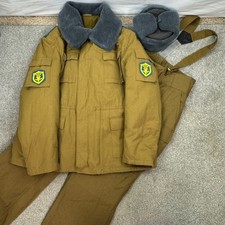
42.Worm colothes (fur coats, valenki, fur gloves, telogreyka padded jackets and padded trousers) are to be worn at unit commander’s order in wintertime at low temperature during exercises, trainings and works and in especially cold areas- at low temperature and strong wind – every day. Worm boots with regulated tops in especially cold areas are worn at commander’s order during works and field training.
43.Special clothing (overalls, work jackets and trousers, helmets etc.) are worn during exercises with military technical equipment and during work in garages, machine fleets, docks, workshops, at airports, in laboratories, healthcare institutions, warehouses, on ships in units etc.
Special clothing wearing order is set by unit (ship) commanders or military school headpeople.
It is forbidden to wear special clothing during meals in dinning rooms, after finishing work (exercises) and in all other cases when wearing special clothing does not seem essential.
45.This rules are obligatory for all servicemen of the Soviet Army and the Navy. Breaking this rules will have disciplinary consequences and for retired servicemen may lead to cancellation of their right to wear military uniforms.