

02-18-2008, 06:26 PM
Upper clothing
47.Overcoat is fastened on the right side. In formation and during parades double-breasted overcoat should be fastened by all buttons and a hook; Out of formation it is acceptable to wear overcoat fastened only by four lower buttons, in this case upper parts of the coat are to be worn on sides, in the form of lapels.
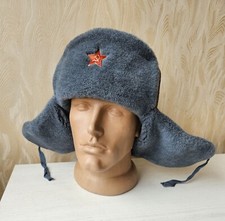
When wearing leather belt with shoulder strap or ushanka cap with unfolded earflaps, overcoat should be fastened by all buttons and hook.
Single-breasted overcoat is to be fastened by all hooks; The back cut should also be fastened. When wearing Navy overcoat, removable collar with white undercollar is obligatory.
Length from half to the lower edge of the army overcoat – 28cm, Naval overcoat – 35cm.
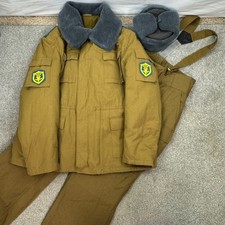
48.Double-breasted padded jacket is fastened on the right side by all buttons and hook.
49.Summer coat is fastened on the right side by three buttons with open collars and 4 with closed collar. Length from the half to the lower edge of the coat: for generals and officers of the Soviet Army – 32cm, for admirals, generals and officers of the Navy – 35cm.
50.Coat for female officers is fastened on the left side. In formation it should be fastened by all buttons. Out of formation it is acceptable to wear it with upper button open, in this case the upper parts of the coat are to be worn on sides, in the form of lapels. In wintertime with winter fur cap it is acceptable to wear removable fur collar.
Coat’s belt should be fastened by a buckle.
51.Rain cape is worn over gimnasterka, uniform jacket, naval short coat, coat and overcoat as well as over all elements of warm and special clothing. It is acceptable to wear rain cape on a shoulder strap when out of formation – on the left arm, properly folded with upper surface on the outside.
52.Bekesha overcoat is fastened by all hooks.
53.Naval short coat is fastened by all buttons and hook. When it is worn by seamen, NCOs and cadets it is obligatory to wear removable collar with white undercollar.
For michmany and officers it is acceptable to wear short coat fastened by only four lower buttons with upper sides open, forming lapels.
54.Uniform jackets with open collar are fastened by all buttons.
55.Uniform jackets with standing collar are fastened by all buttons and hook.
56.Gimnasterka. Collar, cuffs and pockets should be fastened by all buttons.
During march in regions of hot climates it is acceptable to unfasten collar and cuffs by commander’s order.
Gimnasterka with folded collar for hot climate regions is worn in summertime fastened by two lower buttons, in this case upper parts are worn on the sides. At cold weather (in spring, autumn) it is acceptable to wear gimnasterka fastened by all buttons at commander’s order.
When wearing telogreyka padded jackets and padded trousers, padded trousers are to be worn on gimnasterka.
57.For uniform jackets with standing collar (except for white naval ones) and gimnasterki it is obligatory to wear white undercollar, whose upper edge should stand out 1-2mm over the upper edge of the collar. When gimnasterka with folded collar is worn fastened only by two lower buttons, it is worn without undercollar.
58.Sailor shirt and flannel shirt are worn in trousers. With flannel shirt, sailor’s collar is worn over shirt. At air temperature of +25°C striped shirt is not worn.
59.Work shirt for seamen and NCOs is worn over striped shirt with sailor’s collar worn above shirt. The shirt is worn on trousers.
Jacket for military construction personnel is worn on or in trousers. The jacket, cuffs and collar should be fastened by all buttons.
Trousers for jacket are worn on or in boots. Trousers pockets should be closed by two buttons.
60.Pocket covers of uniform jackets and coats should always be worn outside.
61.Uniform jackets, gimnasterki, shirt, ties, sailor and flannel shirts, trousers and breeches should always be clean. Into trousers and breeches a crease should be ironed; a crease is not ironed on any other uniform elements.
Metal elements on the uniform which are not painted should be polished to a shine.