12-14-2008, 05:26 AM
Hi Stah,
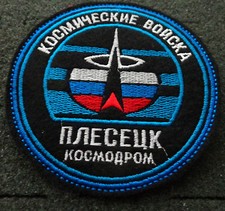
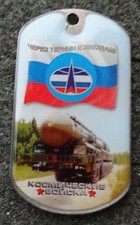
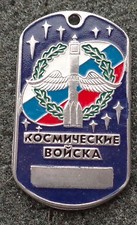
I couldn't pass on the opportunity to try to tackle your question. The Russian Space Forces (Russian: VKS) are the equivilent of the United States Air Force Space Command, of which I was a founding member. Like AFSPC, the VKS is involved in space & missile warning, satellite command and control, missile operations, space surveillance, and space launch.
We were awarded the USAF Space Operations Badge upon completion of our training in one of the areas mentioned above. There were three grades: basic, senior, and master. The basic badge was awarded upon completion of initial Space training while the senior and master badges were awarded based on years of service in USAF Space assignments: for officers the steps occured at seven and fifteen years respectively; for enlisted like myself the senior badge was awarded upon attaining a "7 skill level" and the master badge as a Master Sergeant or above with five years in the specialty from the awarding of the senior badge. The grades of the Space badge were denoted by a badge (basic), a star (senior), and wreath (master) centered above the decoration. Some people also wore the Missile Operations Badge.(See my set of Space Operations Badges below, left). I called it the Star Trek badge and many of us referred to ourselves as Space Cadets. (As an aside, a few of us were awarded the Space Operations Skilled Award for sustained outstanding performance in Space Operations over a period of years. Two other levels were added: Expert and Master.)
In 2004, USAF Space Command introduced a new badge. The new Space Professional Badge replaced the Space Operations Badge and Missile Operations Badge. The new badge is no longer limited to pure space and missile operators, but is also awarded to scientists, engineers, communicators and acquisition officers who have performed space/missile acquisition and operations duties. The new badge is pictured below on the right. We call it the "Buzz Lightyear" badge from the movie TOY STORY.
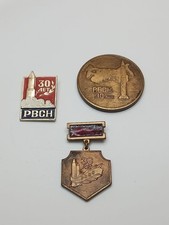
As the Russian Space Forces mirror our space and missile operations in almost every aspect I the believe there is probably a similiar method for awarding the Space Forces badges to their personnel. The Russian's do award more badges and I'll ask my friends if they can give us a complete breakdown on them. Thank you, Stah, for the great question! :thumbsup