12-27-2007, 10:55 PM (This post was last modified: 12-27-2007, 11:02 PM by Slobo.)
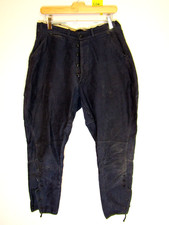
Been searching -- not very sucessfully -- for detailed information on field and company officer breeches so apologize if these questions seem really basic:
-- Did 1943+ blue wool service/dress breeches always carry the same color piping as the tunic and shoulder boards -- Most specifically, royal blue for NKVD, green for NKVD frontier troops, blue for cavalry (and which shade of blue is correct for cavalry?)?
-- Were khaki field breeches commonly worn with service dress -- e.g., with service/dress shoulderboards and sans Sam Browne belt?
-- Were khaki field breeches commonly made of wool/gabaerdine (e.g., like M43 tunics and caps) and not just cotton twill?
breeches were made of different material depending on year, area, what was available, etc. Other than polyester i would not discount any because of material used.
as for piping, i think in general it did match the piping of the tunic / pullover; if there were exceptions to that i can't think of them off the top of my head.
blue piping is difficult! The shades vary greatly; i just had in a setof boards for an NKGB commissar / general that I would swear were sky blue, but had the NKVD-NKGB stripes on them. so, if you are using a set with blue piping for an NKVD display I would not go crazy trying to find perfect royal blue.
The only set i ever had in was for an NKVD general where i could say 100% they were NKVD; generals stripes are very wide, and much easier to see the real color, in this case, a nice deep royal blue.
12-28-2007, 02:55 PM (This post was last modified: 01-19-2008, 05:14 PM by DougD.)
marc,
yes, i know that unexposed fabric retains its color better, but i am more speaking of the original fabric color used, like on the NKVD-NKGB generals boards I had in. Even under the tongue of the board the color was still much closer to sky blue; my point being that blue can vary greatly in the shades used, even before fading.
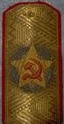
Here are the NKVD-NKGB general-commissar boards with the unusually light blue piping; and another more traditional royal blue set on a white tunic.
"A picture paints 1,000 words." Looking at the boards next to the piping on the collar shows the lighter shade you are referring to Doug. Both items being of similar vintage one presumes, any fading over time would be roughly the same so point well made.
I believe I read somewhere that with the new style NKVD bottle-shaped pogoni adopted in 1943 or '44 (whenever it was) serious availability problems resulted due to their newness and relative complexity to make. Because of this, 2 things occurred:
1. General lack of availability during the late war years resulted in Air Force or even cavalry (Royal blue piping???) to be substituted with AF being most common, presumably because of availability.
2. The boards were re-shaped to the familiar 6-sided version for greater ease of production.
Again, I recall reading this somewhere, possibly even these boards, but maybe someone more knowledgeable can confirm or deny.
Here is a pic of NKVD blue that is more 'royal' than the other pic; shows the difference in blue used in just one organization.
There is is still a lot of debate out there about the bottle-boards, when issued, etc. (not withstanding a few self appointed 'know it alls' who have said the matter is closed due to their word). Also, there is a lot left open about blue shades used in 1943-1944, use of air force boards for a short time, etc.
Slobo Wrote:1. General lack of availability during the late war years resulted in Air Force or even cavalry (Royal blue piping???) to be substituted with AF being most common, presumably because of availability.
Synthetic blue dye for fabric was in short supply in Soviet Union after the war too. This problem was even discussed in cabinet of ministers in 1950 with Stalin involved, because no domestic product existed and everything was imported. Don’t even think about perfect match for regulation’s colors.
Slobo Wrote:2. The boards were re-shaped to the familiar 6-sided version for greater ease of production.
Most of NKVD/NKGB uniform’s items were similar in design to navy items. Shoulder boards were changed to 6-sided navy version shortly after original order was issued on February 16 1943. Army changed to 6-sided version three years latter in 1946.