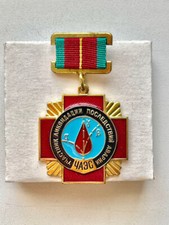
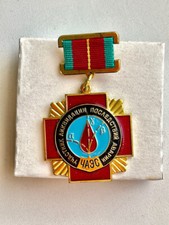
I wonder how many of those gramotas exist and what the condition is of those that do. The very last thought in my mind on returning from such a situation would be "oh got to get this framed and put on the wall". It'd be stuffed into the nearest pocket if not discarded.
Tommy Wrote:What were the numbers on the Red Stars? Close together or spread apart?
They were all over the place, from the upper 3,7xx,xxx's to 3,83x,xxx. No clusters. OSH3's were also randomly distributed from 7x,xxx to 9x,xxx.
CtahhR Wrote:I wonder how many of those gramotas exist and what the condition is of those that do. The very last thought in my mind on returning from such a situation would be "oh got to get this framed and put on the wall". It'd be stuffed into the nearest pocket if not discarded.
Another question is, what did the certificates actually say? Were they generic, or did they specifically mention the liquidation? Two shown in the video have generic decoration, though the text could be specialized. The third paper item shown features an image of the reactor. But whether this is an official certificate or some other type of commemorative item is unclear.
01-01-2013, 09:50 PM (This post was last modified: 01-01-2013, 10:01 PM by Tommy.)
This is stolen from an old thread on here:
" This pinback HSL Star was awarded in 1986 and is part of awesome Chernobyl Nuclear disaster liquidator.Here's seller's description:"Complete Group of 7 decorations and 7 documents for Chernobyl Clean-Up including LATEST TYPE PINBACK Gold Star “Hammer and Sickle” not shown in McDaniel’s “Comprehensive Guide”. Comes with 2 original issue cases and 4 McDaniel authentication certificates. Decorations: Gold Medal "Hammer and Sickle" of a Hero of Socialist Labor, Type 2 Variation 4 with pin back suspension, #20830, in the original issue box, December 24, 1986 issue; Order of Lenin, Type 6 Var. 3, #459687 issued with the star; Order of Badge of Honor, #351827, 1962 issue; Medal for Valiant Labor, unnumbered, 1956; Labor Veteran’s Medal; Medal for Reclaiming the Virgin Lands, Lenin’s Centenary Medal (labor issue). The Gold Star and the Order of Lenin are in mint condition – both are rated at incredible 10 out of 10 by Paul McDaniel. The other awards are in excellent condition.
Documents: hard-covered large certificate for the Title of Hero of Socialist Labor in the original issue box (both the document and the box differ from more common earlier issues); December 1986 order booklet containing entries for the “Hammer and Sickle” Star and the Lenin; order booklet for the 1962 Badge of Honor; hard-covered certificate for the Valiant Labor Medal containing a nice photo of the recipient in his younger years; award documents for the other three medals. Included are four McDaniel authentication certificates: for the “Hammer and Sickle” Medal, Order of Lenin, large document for the Hero Title and the 1986 order booklet.
Awarded to Aleksandr Usanov, who was deputy Minister of “Medium” Machine-Building at the time of the Chernobyl catastrophe. His area of responsibilities was construction of nuclear sites, most likely for both civilian and military purposes. Usanov was among the very first of the Moscow nuclear management to fly to the site of the disaster. He arrived there on May 1, 1986 after supervising the previously scheduled launch of the Ingalinskaya Nuclear Station in Lithuania. By then the radiation level reached at the devastated Chernobyl Station reached 17 thousand Roentgens per hour, an instantly lethal dose for all living creatures. Usanov became the chief of the ad-hoc central headquarters for “eliminating the breakdown” (a rather euphemistic term coined in Moscow to conceal the scope of the disaster). For his heroic work Usanov was made Hero of Socialist Labor on 24 December 1986.
His Hero of Socialist Labor citation very much resembles the Hero of Soviet Union citations for military heroism. It reads, for “valor, selfless action, and heroic labor shown during the elimination of the breakdown at the Chernobyl Nuclear Power Station and liquidation of its consequences”. "
Tommy Wrote:This is stolen from an old thread on here:
" This pinback HSL Star was awarded in 1986 and is part of awesome Chernobyl Nuclear disaster liquidator.Here's seller's description:"Complete Group of 7 decorations and 7 documents for Chernobyl Clean-Up including LATEST TYPE PINBACK Gold Star “Hammer and Sickle” not shown in McDaniel’s “Comprehensive Guide”. Comes with 2 original issue cases and 4 McDaniel authentication certificates. Decorations: Gold Medal "Hammer and Sickle" of a Hero of Socialist Labor, Type 2 Variation 4 with pin back suspension, #20830, in the original issue box, December 24, 1986 issue; Order of Lenin, Type 6 Var. 3, #459687 issued with the star; Order of Badge of Honor, #351827, 1962 issue; Medal for Valiant Labor, unnumbered, 1956; Labor Veteran’s Medal; Medal for Reclaiming the Virgin Lands, Lenin’s Centenary Medal (labor issue). The Gold Star and the Order of Lenin are in mint condition – both are rated at incredible 10 out of 10 by Paul McDaniel. The other awards are in excellent condition.
Documents: hard-covered large certificate for the Title of Hero of Socialist Labor in the original issue box (both the document and the box differ from more common earlier issues); December 1986 order booklet containing entries for the “Hammer and Sickle” Star and the Lenin; order booklet for the 1962 Badge of Honor; hard-covered certificate for the Valiant Labor Medal containing a nice photo of the recipient in his younger years; award documents for the other three medals. Included are four McDaniel authentication certificates: for the “Hammer and Sickle” Medal, Order of Lenin, large document for the Hero Title and the 1986 order booklet.
Awarded to Aleksandr Usanov, who was deputy Minister of “Medium” Machine-Building at the time of the Chernobyl catastrophe. His area of responsibilities was construction of nuclear sites, most likely for both civilian and military purposes. Usanov was among the very first of the Moscow nuclear management to fly to the site of the disaster. He arrived there on May 1, 1986 after supervising the previously scheduled launch of the Ingalinskaya Nuclear Station in Lithuania. By then the radiation level reached at the devastated Chernobyl Station reached 17 thousand Roentgens per hour, an instantly lethal dose for all living creatures. Usanov became the chief of the ad-hoc central headquarters for “eliminating the breakdown” (a rather euphemistic term coined in Moscow to conceal the scope of the disaster). For his heroic work Usanov was made Hero of Socialist Labor on 24 December 1986.
His Hero of Socialist Labor citation very much resembles the Hero of Soviet Union citations for military heroism. It reads, for “valor, selfless action, and heroic labor shown during the elimination of the breakdown at the Chernobyl Nuclear Power Station and liquidation of its consequences”. "
Tom,
I believe that is the one group I was refering to earlier, but could not find :thumbsup
Valery Alexeyevich Legasov (Russian: Валерий Алексеевич Легасов; born September 1, 1936 in Tula, Russia, Soviet Union; died April 27, 1988 in Moscow, Soviet Union) was a prominent Soviet inorganic chemist and a member of the Academy of Sciences of the USSR. He is most famous for his work as the chief of the committee investigating the Chernobyl disaster.
By the time of the Chernobyl disaster on April 26, 1986, Legasov was the First Deputy Director of the Kurchatov Institute of Atomic Energy. He became a key member of the government commission formed to investigate the causes of the disaster and to plan the mitigation of its consequences. He took the most important decisions to avoid repeat accidents and informed the government of the situation in the disaster area. He did not hesitate to speak to his fellow scientists and to the press about the safety risks of the destroyed plant and insisted on the immediate evacuation of the entire population of the city Pripyat nearby. In August 1986, he presented the report of the Soviet delegation at the special meeting of International Atomic Energy Agency (IAEA) in Vienna. His report displayed a depth of analysis and honesty in discussing the extent and consequences of the tragedy.
On the second anniversary of the disaster, Legasov committed suicide by hanging himself from the stairwell of his apartment. Reportedly, before his suicide, he recorded himself on audiotape revealing previously undisclosed facts about the catastrophe. According to an analysis of the recording for the BBC TV Movie "Chernobyl Nuclear Disaster" (where he was played by actor Adrian Edmondson), Legasov claims political pressure censored the mention of Soviet nuclear secrecy in his report to the IAEA, a secrecy which forbade even plant operators knowledge of previous accidents and known problems with reactor design. The programme implied that his suicide was at least partly due to his distress at not having spoken out about these factors at Vienna, the suppression of his subsequent attempts to do so and the damage to his career that these attempts caused. The Bulletin of the Atomic Scientists also stated that Legasov had become bitterly disillusioned with the failure of the authorities to confront the design flaws.
Legasov's suicide caused shockwaves in the Soviet nuclear industry. In particular, the problem with the design of the control rods in Chernobyl-type RBMK reactors was rapidly admitted and changed. On September 20, 1996, then Russian president Boris Yeltsin posthumously conferred to Legasov the honorary title of Hero of the Russian Federation for the "courage and heroism" shown in his investigation of the disaster.
Peter Bukhalo – 1st class helicopter pilot. He was awarded Order of October Revolution (Decree of the Presidium of the Supreme Soviet on December 24, 1986)