1. Last name: Maksai
2. First name and patronymic: Pyotr Grigoryevich
3. Military rank: Senior Sergeant
4. Sex: Male
5. Year of birth: 1898
6. Place of birth: City of Belaya Tserkov, Kiev Oblast, Ukrainian SSR
7. Party membership (since which year): Member of the Communist Party since 1944
8. Education: Secondary
9. Nationality: Ukrainian
10. Since which year in the Red Army: From May 1941 through June 23, 1945
11. Place of service (name of the unit) and position at the time of the award: Company first sergeant in the 5th Engineer-Sapper Brigade of the Reserve of the High Command
12. Current place of service and position: Depot manager with Mosvostok Grazhdanzhilstroi [Moscow East Civilian Housing Construction Department], Ministry of Coal Industry, city of Moscow
13. Home address of the awardee: Village of Aksyonovo, house nr. 31, Khimki Raion
14. Record of all awards received:
Names of the orders and medals/Their numbers/Numbers of the documents/Ground of award
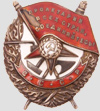
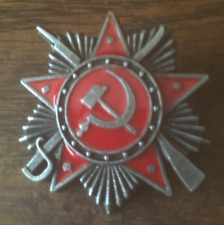
Order of the Red Star 278415 965872 Order of the 5th Engineer-Sapper Brigade nr. 029/N of October 30, 1943
Medal for Courage 1032579 100503 Order of the 5th Engineer-Sapper Brigade nr. 031/N of September 16, 1944
Signature of the awardee: [signed]
I confirm the correctness of the data and the signature of the awardee (position and signature):
Chief of the ___ Section, Military Commissariat of the Khimki Raion
[signed]
March 14, 1947
Of the 5th Engineer-Sapper Brigade of the Reserve of the High Command
October 30, 1943 – Nr. 029/N – Active Army
On behalf of the Presidium of the Supreme Soviet of the USSR, for the exemplary accomplishment of combat missions in the struggle with the German invaders and the valor and bravery displayed in the process, I award:
[…]
The Order of the Red Star to:
9. Sergeant Pyotr Grigoryevich Maksai, squad leader in the 104th Engineer-Sapper Battalion
[…]
Temporary commander of the 5th Engineer-Sapper Brigade of the Reserve of the High Command
Lieutenant Colonel-Engineer [signed] /Timokhin/
[/SIZE]
1. Last name, first name and patronymic: Maksai, Pyotr Grigoryevich
2. Rank: Sergeant
3. Position and unit: Squad leader in the 104th Engineer-Sapper Battalion, 5th Engineer-Sapper Brigade
Nominated for: Order of the Red Star
4. Year of birth: 1898
5. Nationality: Ukrainian
6. Party affiliation: Not a member
7. Participation in the Civil War, the subsequent combat actions to defend the USSR and the Patriotic War (where and when): Didn’t participate in the Civil War; has been participating in the Patriotic War since June 1941
8. Wounds and contusions received during the Patriotic War: No
9. Since when in the Red Army: May 15, 1941
10. Drafted by which military commissariat: Military Commissariat of the Belaya Tserkov Raion, Kiev Oblast
11. Awards received previously (for which merits): None
12. Permanent home address of the prospective awardee and the address of his family: ______________
Short, concrete description of his combat feat or merits:
Ordered to cross the Dnieper River, comrade Maksai displayed bravery, courage and leadership skills during the crossing. Under heavy enemy rifle, machine-gun and mortar fire the platoon led by comrade Maksai put 792 soldiers and officers and 117 ammunition boxes across the Dnieper River on September 27 alone, conducting 88 trips with 2 boats. On the second shift the platoon ferried across 556 _______ and 54 ammunition boxes in 64 trips.
He deserves the Order of the Red Star.
Commander of the 104th Engineer-Sapper Battalion
Captain [signed] /Volkhovskoi/
October 21, 1943
He is to be awarded the Order of the Red Star.
Temporary commander of the 5th Engineer-Sapper Brigade of the Reserve of the High Command
Lieutenant Colonel-Engineer [signed] /Timokhin/
October 30, 1943
Awarded the Order of the Red Star by Order of the 5th Engineer-Sapper Brigade of the Reserve of the High Command nr. 029/N of October 30, 1943.
Chief of the 3rd Section of the 5th Engineer-Sapper Brigade of the Reserve of the High Command
Captain of the Administrative Service [signed] /Polonsky/
October 30, 1943
Without distracting from all of your absolutely brilliant and often coverted finds.
I would like to know where you got all the "y"s from... are they on sale somewhere? It does seem like a "blowout".
I know there is a certain level of anglisisation but as an Englishman I find it rather difficult to pronounce so many y noises.
I may be biased but j is also a "sometimes vowel" but sometimes the silence works best of all.
The way things are presenting themselves here "Эмма" would be presented as "Jemma" or "Yemma" but we are all familiar with "Emma" and know how to say it. We all, within our own languages (or within knowledge of other languages) know the emphasis.
Translit is NOT Anglicisation.
CtahhR Wrote:...The way things are presenting themselves here "Эмма" would be presented as "Jemma" or "Yemma" but we are all familiar with "Emma" and know how to say it...
Actually, as you know, there are different "e" sounds in Russian. In the case you mention, the Russian letter "Э" is NOT pronounced or transliterated in the way you suggest. This letter happens to be a hard and clear sound like in "hay" or "hey", without the "h" letter. The letter "е" on the other hand fits the description you gave, namely "ye" or "je".
Quote:Without distracting from all of your absolutely brilliant and often coverted finds. I would like to know where you got all the "y"s from... are they on sale somewhere? It does seem like a "blowout". I know there is a certain level of anglisisation but as an Englishman I find it rather difficult to pronounce so many y noises. I may be biased but j is also a "sometimes vowel" but sometimes the silence works best of all. The way things are presenting themselves here "Эмма" would be presented as "Jemma" or "Yemma" but we are all familiar with "Emma" and know how to say it. We all, within our own languages (or within knowledge of other languages) know the emphasis. Translit is NOT Anglicisation. Andy Kaufman is dead but we are not Tony Clifton.
Quote:Actually, as you know, there are different "e" sounds in Russian. In the case you mention, the Russian letter "Э" is NOT pronounced or transliterated in the way you suggest. This letter happens to be a hard and clear sound like in "hay" or "hey", without the "h" letter. The letter "е" on the other hand fits the description you gave, namely "ye" or "je".
What do any of these three (mine included) comments have to do with what Bill just posted? Is spelling really that much of an issue here? I'm concerned I might have missed something.
"patina imparts character" - PJS
A wise man said: 'you should not pay a premium for what you want beyond your comfort level, and always ensure there is a mutually agreeable return policy.'
"е" and "э" are pronounced differently. At the beginning of a word, "е" sounds like "ye" (as in ефрейтор / yefreitor) and "э" as "e" in экран / ekran. Using a "j" in transliterations is confusing as people can interpret it as sounding like the "j" in "Joe" for example (that's why the "j" is used in not a single transliteration, except for scientific ones).
Auke Wrote:"е" and "э" are pronounced differently. At the beginning of a word, "е" sounds like "ye" (as in ефрейтор / yefreitor) and "э" as "e" in экран / ekran. Using a "j" in transliterations is confusing as people can interpret it as sounding like the "j" in "Joe" for example (that's why the "j" is used in not a single transliteration, except for scientific ones).
Generally correct, but apart from transliteration used e.g. in library catalogues, where "j" is used "й", it is used in some less common transcriptions. In Polish, there's a transcription that was formed thanks to work of both Polish and Russian specialists and "J" is used both when transliterating "й" and letters like "ю", "е", "ё", "я" - "j", "ju", "je", "jo" "ja". Also Chech and German transcription (unless I am mistaken) use "j". However, for this forum english transcription should be considered correct as it is most widely used. Use of "j" should however be preserved for the use of on-line keyboards etc. where "j" gives us "й".