Posts: 2,150
Threads: 482
Joined: Oct 2003
Reputation:
0
Al-muell Wrote:Isn't it "HQ of 9th air army" (ok, "shtab" isn't exactly HQ, but what's the english word for this?)?
Al,
I think that would translate to Staff which in this case would then be as in HQ Staff.
Eddie.
Everybody's equal, But some more than others!
"Those who come to us with the sword - will be killed by the sword" - Alexander Nevski
Posts: 1,822
Threads: 186
Joined: Mar 2003
Reputation:
0
That's the word! What's going on with my memory???
Thanks.
btw.
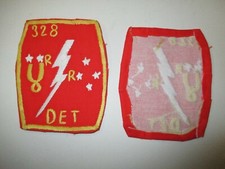
I don't think it is pointless - it maybe a good way to identify a submitor of certain documents for beople who don't speak russian plus it may help people collecting the stamps and it may be a good occasion to talk about fake and original stamps.
Posts: 1,645
Threads: 147
Joined: Jan 2002
Reputation:
0
I think it would probably be more realistic if we concentrated on fake stamps. As Shawn mentions, there are way to many to post here.
Posts: 2,150
Threads: 482
Joined: Oct 2003
Reputation:
0
04-16-2004, 09:56 AM
(This post was last modified: 04-16-2004, 01:29 PM by Taz.)
The brigade was officially referred to as the 42nd Separate Rifle Brigade, however many seamen joined its ranks during formation, reinforcement and operations.
The formation of the brigade was completed in October, 1941 and up to December, 6th she was engaged in combat training.
By the time it was sent to the front it consisted of 4417 soldiers commanded by the Hero of Soviet Union lieutenant colonel M.S.Batrakov.
On December, 13th,1941 the brigade arrived at Lyubertsy rail station and was part of the 24th Army, a reserve unit in the Moscow zone of defense.
On the night of December, 22nd the brigade marched to Ostrovtsy near Lyubertsy with the orders to hold the area against counter attacks in the Moscow direction, and to be prepared for offensive actions. On arrival at the line of defence the brigade was put to the disposal of the 3rd Guards Rifle Division of the 1st shock army.
On December, 29th the 1st shock army together with the 42nd Rifle brigade, advanced on Severo, Western front.
On January, 9th, 1941 the brigade participated in the counterattack on toropetsko - holmskom.
They arrived at Stalingrad on August, 31st, 1942, having received on road reinforcements of vehicles and men, mainly made up of Navy personal. On the night of the 2nd – 3rd of September, the brigade was forwarded through the Volga in Stalingrad and began to carry out combat operations.
From the Elshanke defense area the brigade was then hastily thrown into area № 6 near the hospital, on the northern coast of the river Tsarina where they were engaged in fierce fights.
On September, 17th the opponent broke through the right flank of the brigade and has threatened to encircle the brigade. Communication with the division and HQ staff of the army was broken. However they were, with much difficulty able to inform the HQ of the enemy breakthrough and were ordered to change the line of defence.
On the night of the 17th- 18th September, a company from the 42nd advanced forward recovering equipment and wounded men as they went and took up new defensive positions on the North bank of the river Tsarina in the zoo area. Sheltering in tunnels. The Unit commissioner was badly wounded in this action and many brave soldiers were killed and wounded from the brigade.
On September, 19th the 92nd Rifle Brigade, advancing on Raboche through the country streets drove out the Germans from the Stalingrad station area and moved on elevatoru. As a result of this the divisional command of the 42nd Rifle Brigade, who had at that time been fighting for 4 days non-stop in the Voroshilovskom area, were relived from the front. However the Brigade was unable to take a break from the fighting for long. German submachine gunners broke through on the left bank of the river Tsarina and threatened the ferries. Throughout the evening of September, 21st advance parties of the enemy managed to break through on the Moscow streets to the bank of the river Volga in the area of the Central quay where 42nd and 92nd had their defences. The ferry had to stop work.
On September, 22nd fighting continued. Advancing up the street the German Infantry with tanks in support were able to cut off 92nd and 42nd brigades from parts of 13th Guards Rifle division.
During the night of 22nd – 23rd September, on the right bank two regiments of the 284th Rifle division advanced in support. Colonel N.F.Batjuka received the order to restore a first line of defence broken by the enemy that evening. On September, 23rd during an enemy bomber strike on the command post of brigade colonel M.S.Batrakov, the chief of staff of the brigade lieutenant colonel G.E.Sazonov, the chief of communication captain Trojko, the assistant to the chief of a staff the senior lieutenant Strulev and other officers of the staff were badly wounded. The command structure lost most of its senior officers of the brigade in an instant.
On the night of 26th – 27th September, the remnants of the 42nd and 92nd Rifle brigades withdrew to the left bank of the Volga.
Eddie
Everybody's equal, But some more than others!
"Those who come to us with the sword - will be killed by the sword" - Alexander Nevski
Posts: 547
Threads: 11
Joined: Aug 2002
Reputation:
0
That said, there is no problem with a "unit stamps Q&A" (questions and answers) thread where any stamps that need translating, clarification, examination etc. can be discussed. I just don't see how we could do anything systematic.
Shawn
Posts: 1,205
Threads: 80
Joined: Apr 2003
Reputation:
0
Hi,
On the occasion of an other thread "Red Star, Civil War type 1918-1922" (orders section), it has been mentioned in John Clarke's (until now not so reliable) book :
"An early forerunner of the Red Star for gallantry was awarded during the Civil War of 1918-1922.
During this time of conflict, units of the Red Army were self-supporting and produced their own insignia."
3 points :
* Is this story real ?
* Were they gallantry badges, medals, or just units identification insignias ?
* Have you seen some of them ? Pictures ?
Many thanks.
Ch.
Posts: 547
Threads: 11
Joined: Aug 2002
Reputation:
0
I think they are referring to basic Red Army insignia - usually a red cloth stripe on the front of the cap.
Shawn
Posts: 1,205
Threads: 80
Joined: Apr 2003
Reputation:
0
Shawn,
Thanks. But nothing more elaborated than this red stripe ?
Ch.
Posts: 208
Threads: 41
Joined: Feb 2003
Reputation:
0
At about this time, there was an "Independent Caucasus Army" (perhaps substitute separate for independent, your choice), or OKA. They did make/commission at least some of their own decorations and insignia, as well us unit badges. Whether or not you consider this a unit of the Red Army or not is open to question. Their name gives us a hint about what they thought. It was at least parallel and was eventually absorbed into it after Georgia was taken into Soviet custody, admitted to the Soviet Brotherhood of Love or however you may want to phrase it.
I have a major's tunic (artillery? maybe so) with OKA insignia. As for their own gallantry awards, I don't know and I don't recall ever seeing anything like that. I think that they used the same Hero of the Revolution and earliest Red Banner badges and maybe there wasn't anything beyond that, but I'll inquire further if you're really interested. This is pretty obscure stuff, even for the very knowledgeable history freaks that I associate with.
Chuck In Oregon
Currently, Chuck In Tbilisi, Georgia
Posts: 1,205
Threads: 80
Joined: Apr 2003
Reputation:
0
Chuck,
Many thanks for your answer. This hives me a first clue. I'll try to make enquiry myself, and if no result, I'll welcome your help and let you conduct further enquiries.
Cheers.
Ch.
|