1. Aside from the peaked cap worn with the summer uniform and the ushanka with the winter, why was the peaked cap sometimes worn with the winter?
2. What EM uniform insignia (patches, service stripes, etc.) worn on the summer jacket could not be worn on the greatcoat?
3. Why are white gloves worn with the officer winter parade uniform and olive drab (?) gloves with the warrant officer winter parade uniform?:
willie777 Wrote:1. Aside from the peaked cap worn with the summer uniform and the ushanka with the winter, why was the peaked cap sometimes worn with the winter?
Probably depends on what time period. According to the 1989 regulations, the peaked cap was not worn with the winter uniform. It may have during earlier times, like in the 50's.
willie777 Wrote:2. What EM uniform insignia (patches, service stripes, etc.) worn on the summer jacket could not be worn on the greatcoat?
Arm-of-service patches were worn on both sleeves for conscripts and kursants. I don't think conscripts had seniority stripes, as the term of service was only 2 years. Kursants, praporschiks, and extended-servicemen wore appropriate insignia indicating year of instruction and years of service on their parade uniforms, but only kursants wore such patches on the greatcoat.
willie777 Wrote:3. Why are white gloves worn with the officer winter parade uniform and olive drab (?) gloves with the warrant officer winter parade uniform?:
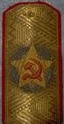
The illustration actually shows a senior officer (2-red-stripes-on-gold shoulderboards) and a lieutenant general. When wearing gold shoulderboards (capitals, hero cities), white gloves are used. This also applies to the summer officer parade uniform. When the shoulder boards are greatcoat grey, brown gloves are worn.
04-18-2007, 06:57 PM (This post was last modified: 04-18-2007, 07:07 PM by willie777.)
ibaya Wrote:Probably depends on what time period. According to the 1989 regulations, the peaked cap was not worn with the winter uniform. It may have during earlier times, like in the 50's.
04-18-2007, 11:34 PM (This post was last modified: 04-18-2007, 11:44 PM by ibaya.)
DougD Wrote:The second guy is not a General; he is a Warrent Officer. -dd
Another giveaway would be that he's wearing an ushanka, rather than a papakha. I stand corrected.
I guess it's part the weather and/or the occassion. Peaked caps are no help in the dead of a Moscow winter! The various uniforms are divided into summer/winter in the regulation book, and none of the illustrations show the peaked cap with the greatcoat. Guess just because it's not in there does not mean it is not allowed --- how very un-Soviet! :)
Whatever the commander tells you to wear, you wear!
I don't have regulations at hand, but I am sur that in the descriptions of winter uniform (not in illustrations section) it says that it is allowed to wear visor caps togeather with the greatcoat with both in-formation or out of formation winter uniform.
btw. Generals did wear ushanka on some ocasions...
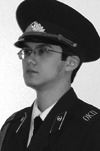
This picture immediately came to mind. Here's another one...honor guard unit. Given the dress of the audience, it doesn't seem to be the dead of winter...perhaps dress regulations allowed them to switch out Ushankas as the weather got warmer (into the Spring).
Synthesis Wrote:This picture immediately came to mind. Here's another one...honor guard unit. Given the dress of the audience, it doesn't seem to be the dead of winter...perhaps dress regulations allowed them to switch out Ushankas as the weather got warmer (into the Spring).
It would spelled out in the text of the regulations .... from the picture examples, it's probably so. Wish I could read Russian beyond the most basic simple sentences!
Synthesis Wrote:This picture immediately came to mind. Here's another one...honor guard unit. Given the dress of the audience, it doesn't seem to be the dead of winter...perhaps dress regulations allowed them to switch out Ushankas as the weather got warmer (into the Spring).
04-21-2007, 02:09 AM (This post was last modified: 04-21-2007, 02:11 AM by ibaya.)
willie777 Wrote:Why does the officer have a sleeve patch?
The patches probably have bullion piping on them, similar to the material used to embroider general's collar patches. The officer patches are embroidered instead of stamped rubber. The enlisted might be, too. These are illustrated in "Soviet Arm Badges, 1920-91" by A. Stepanov, pp. 28-29:
[INDENT]February 16, 1971, USSR MD Order No 29 established the new special parade uniform for personnel of honor guard companies and bands, attached to them, in garrisons, where the military districts' and force groups' headquarters were located ... On the left sleeve of tunics and overcoats of all servicemen the appropriate arm badge (Motorized Rifles, Air Force, musicians) was sewn. The arm badges for officers were embroidered with yellow silk and had the golden piping. The arm badges for soldier and sergeants could be embroidered or molded on of plastic. In reality the embroidered badges were worn only by the soldiers of honor guard companies in Moscow and Leningrad. The Decision No 17-71 of the technical Committee of the Clothing Supply Directorate dated march 15, 1971, (about the sewing of the special parade uniform), determined that the arm badges should be sewn on both sleeves.[/INDENT]