

05-29-2010, 05:36 AM
Eryk,
Splendid blog. I enjoyed seeing your pieces, but more enjoyed your commentary on the state of the market, "friendly" collector community, CSM vs MMM, etc. :thumbsup
I disagree with your assertion:
"Prisoners in the penal battalions/companies were indeed awarded medals and orders. They were still military personnel..."
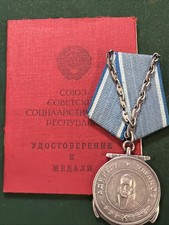
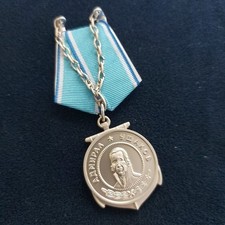
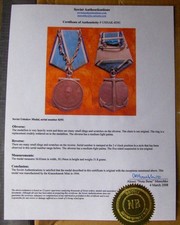
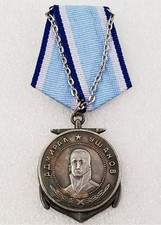
Admittedly the onus of evidence is on me since we're actually looking at two pieces associated with penal/disciplinary units (the Ushakov in this thread and your BM), but I'm fairly certain more than one Russian source has stated that those serving in a penal unit weren't really considered "soldiers" and were thus ineligible for awards. Bad on me for not referencing the source at the time and presently I'm overseas so I won't have ready access to my research material for some time.
We have to remember the mentality of 1930 Soviet Union with enemies of the state, cult of personality, GULAGs, surrender = traitor, etc. to understand the horrific nature of penal units. Just the fact that the person sentenced to such a unit was stripped of his rank and sent to an almost certain death sentence unless surviving his term and/or being wounded, does not lend itself to its recipients being "worthy" of receiving a State award. A simple reading of the period's award booklets mentioning that the recipient must maintain high standards, be an example of an outstanding citizen, etc. or face having the award revoked shows that receiving an award was a big deal. Such a momentous event does not readily lend itself to disgraced members of a unit trying to reprove their loyalty to the State.
We've all seen unit award listings in which many of the recipients received decorations just for "being there". A penal unit's presence or participation in a battle was by design, in the very thick of things so if eligible, I would propose we'd see even more penal unit member awardings which we don't. Again, I don't have access to the source, but I have an article that talked specifically about penal units and at any one time there were something like several divisions worth of soldiers/sailors in penal units (not in organic units, but sprinkled through the force). This is credible since the Soviet Army fielded over 300 rifle divisions. Frequency-wise I've seen more awards to the special operations OMSBON brigade, then we've seen awarded to penal units in the aggregate. I think the rarity of penal unit awardings speaks for itself.
That being said, this emphasizes the rarity of these two particular pieces. Again, I think they were awarded to either "non-penal" command and control element such as the commander award I mentioned and to support him, he would have needed lower enlisted to carry radios, do paper work, etc. The other possibility is as mentioned, these awards were administrative or valor exceptions or oversights.
Can you send me the digital research of your BM award citation to see if there are any other clues?
Any one else got an idea?