05-09-2014, 04:43 PM
I suppose this question can very simply be answered with another question - why not?
When I originally "broke into" collecting Soviet awards it was due to the fact I was told that it was an "easy" pursuit. I was quite obviously lied to. I only really started to focus in on Soviet awards in January of 2007 but I had by that time already Soviet "bits" in the collection.
I've always been a collector, as a young child in school (6-7 years old) my teachers were always amazed not only by my enthusiasm to collect but also to understand just what I was collecting, an enthusiasm that harks back to my very first experience with money as a child. The very first time I handled coins (for the purpose of making a transaction and not just to choke on them) I was given two florins (that's an old English coin) by my grandfather to pay for something I wanted at about the age of two years old. The very first thing that struck me was that these two coins had the same purpose but had different designs. How could two different coins have the exact same purpose? He would tell me about "the queen" (Victoria) and the "new king" and "old king" which just raised more questions for me. This quickly evolved into my grandfather reading me encyclopaedia entries about these monarchs and the history around them (remember encyclopaedias? those stale smelling vast volumes). Looking through these rather word heavy books being at that time unable to read I was very obviously drawn to pictures, usually of the monarchs in military uniform or images of war. The infantile imagination conjures all sorts of magic and myth around warfare so I soon got very deeply interested in that. "What did you do in the war?" is a very echoed question. Then getting an interesting answer full of reminiscing is soon followed up by the appearance of Medals and the such. That was the pinnacle for me. By the age of 10 I'd already collected tens of Medals and listened to hundreds of hours of memories from various old boys as well as reading every book and watching every film I could about war or just conflict in general - no matter how graphic. Being from a medical (including combat medic) family with very "sterile" medical handbooks always at hand to read, the blood and guts never shocked me (in fact the "mental nurse's handbook" of 1895 has some extremely cruel treatments for "nostalgia"/PTSD).
By the age of 8 I was very competently buying up militaria, coins, stamps, books and other goodies at local auctions but due to the fact I'm from rural Yorkshire there was rather little "foreign" stuff but I was always interested in "external" pieces. Spending many hours as a small child also watching ships come into and out of a seaport also helps inspire the young mind. I elected against enrolling in a naval academy as unlike my heritage would like to insist I am more interested in the army than "Senior Service".
I've always been unbiased in my collecting of awards - if something was awarded it has meaning no matter who awarded it. Obviously British items were always available to purchase, also "war trophies" from actions against the Germans and I picked up whatever came my way, uniforms, awards, field gear, paperwork, you name it. It has only been in more recent technologically advanced times of communication has it become ever easier to obtain items from all over the world and why not take advantage? Over the last 16 years of being online the Royal Mail (and other UPU members) have certainly been busy delivering items my way. I wouldn't be surprised if I've received 20-25,000 packages due to the internet and I've certainly not finished yet!
The collection of international awards alone now stands at over 7,000 "metal" bits which a vast library of supporting documents, certificates and the like. Some times the collecting takes the easiest route but sometimes the most difficult which is why the three most populous nations' awards in the collection are as follows;
#1 Bulgaria 2,200+ (Easy)
#2 DPRK 1,500+ (Difficult, due to lack of information etc.)
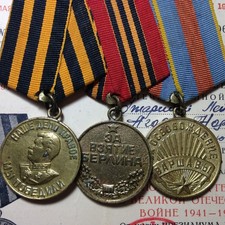
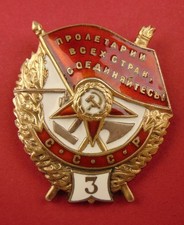
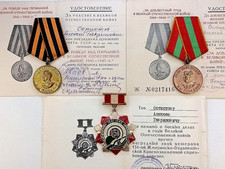
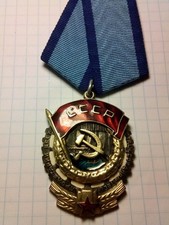
#3 USSR 800+ (Medium?)
Unfortunately the collection isn't as large as it could have been due to it coming third or fourth fiddle for a long period of time (I have other collections that need attention and funding).
I think the most important thing about collecting is to preserve the prestige, honour and dignity of those who were originally awarded (or intended to be awarded) with the pieces. With support documentation almost any "bit of metal" can offer up the most intriguing and detailed story and it is even more prominent if you get the chance to communicate with the recipient. I have been lucky in being able to talk to recipients of awards in the collection (both now living and dead) and add to their personal history. I have very frequently gone well out of my way to obtain items specially to preserve them or to present them to a wider audience. You can see by the posts here that I don't shy away from presenting awards for reference for all to see, so everyone can have a greater understanding of just what was and is occurring in the world we all live. This passion has not gone unnoticed as a vast percentage of items in the collection have been given to me to preserve and research - including by the original recipients. I also find it rather off-putting sometimes when these pieces of history are just used for profiteering. I can't think of anyone that was ever awarded for any reason to tell me when they were performing the actions leading to the award they were thinking "I hope I get rewarded for this so a dealer can make a huge profit margin when I'm hard up or dead".
The items in the collection can be seen as "demonetised", a reason why some people have given awards for me to look after as there is no family struggle over who profits from them.
The collection is a fairly open book. Many items are on display in various places, they are used for reference and have graced many museums. The only problem is that is can be overwhelming.
I also have a keen sense of fair play in honouring the memory of those (from any nation) awarded for their actions. I've campaigned for veterans to be issued with awards they are deserving of, war memorials and for the freedom of information surrounding awards - with varying levels of success.
Those who collect Soviet awards is an ever changing group. They come and go due to supply, demand, profit and being misinformed or informed. There is of course a solid pillar of unwavering enthusiasts completely unchanged by market effects.
Just as an illustration attached is an image is just where in the world awards in the collection come from, quite unblinkered collecting due to communication. I have no idea how nothing from Danmark has made it in yet. I was very much more on the trail of "Plader" and "stærke øl". Not too bad from starting out in rural Yorkshire...... (This is just an indicator of awards I have uniforms and field gear from some unhighlighted nations)
"Signed with his own rubber stamp"