07-29-2003, 07:31 AM
More from my old NKVD/KGB website.
SMERSH
The term SMERSH comes from the Russian words "smert' shpionam" or "Death to Spies!".
SMERSH was Soviet military counter-intelligence during the later part of WWII. It was officially completely separate from the security organs; the NKVD and the NKGB. SMERSH was a department of the Soviet General Staff. There were actually two SMERSH organizations, one in the army General Staff and a smaller one in the Naval General Staff.
SMERSH was created in 1943 and took over from the Special Sections (osobye otdely or OOs) of the 3rd Directorate (Military Counter-Intelligence) of the NKVD GUGB. It lasted until 1946 when it was incorporated into the 3rd Directorate (Military Counter-Intelligence) of the newly formed MGB. Many MGB-OO personnel and units continued to refer to themselves as SMERSH long after 1946, even on official letterhead and stamps. There are even examples of KGB-OO units calling themselves SMERSH in the mid-1950s. After all, the name applied equally well to the reconstituted OOs!
Almost all SMERSH personnel, including its commander Lieutenant-General Viktor Semenovich ABAKUMOV, came from the 3rd Directorate of the NKVD-GUGB. Likewise, the majority of SMERSH personnel were transferred to the 3rd Directorate of the MGB in 1946. Thus, SMERSH was directly related to the Soviet state security organs. However, SMERSH was administratively separate from state security organs during its short existence. It reported to military authorities, and ultimately to Generalissimo STALIN.
The subordination of military counter-intelligence duties under the control of the military in early 1943 can be viewed as a reward for the military's successes, especially in the Stalingrad Offensive Operation. The transfer of SMERSH to the MGB in 1946 can be seen as a sign of the times - a warning that state security matters were back to their pre-war norm.
SMERSH was responsible for uncovering spies, saboteurs, and subversives in the military, for ensuring the protection of military factories, military goods and shipments, for interviewing and screening all liberated Soviet POWs and any Soviet citizens liberated by the Red Army, and for weeding out all Nazis, German spies, and collaborators in areas "liberated", or occupied, by the Red Army.
They were responsible for finding and eliminating opposition to the Red Army or Soviet rules in areas of military operations. They carried out many special tasks for the Red Army and Soviet leadership. For example, it was SMERSH personnel who searched HITLER's bunker and examined the famous Nazi corpses. They performed the autopsies, combed the area, interviewed witnesses, etc. (Incidentaly the conclusions of the SMERSH investigation, that HITLER was murdered by his henchmen with the use of cyanide, is now accepted as the most likely story of the final days of the Reich. The later NKVD investigation, which gave the world the "proof" that HITLER had shot himself, is now known to be full of flaws and forensic errors.) Many doctors, pathologists, historians, and scientists worked under SMERSH. SMERSH also led the Soviet groups which idenitified, dismantled, and transported to the Soviet Union German factories, indutries, and art treasures.
SMERSH, the NKVD, and the NKGB worked closely together to perform military counter-intelligence functions during this period. SMERSH was in charge of work in all areas under military jurisdiction, generally area from the front lines back to the rear of Soviet Frontal zones. The NKVD/NKGB was responsible for all actions behind that. In many cases SMERSH, NKVD, NKGB personnel, actions, and jurisdiction is hard to distinguish.
In occupied East Europe SMERSH was the legal military counter-intelligence entity as it was an arm of an occupying military force. NKVD/NKGB personnel were relegated to "advisor" roles.
SMERSH became famous, or infamous, in the west for its actions in occupied East Europe. (SMERSH continued to exist long after the war as a sinister foreign intelligence service in Ian Fleming's world of James Bond!) SMERSH's hunt to find Nazis and Nazi collborators, to acquire German materials and valuable, and to receive Soviet POWs and repatriated citizens brought it into frequent contact with western military and civilian government leaders and the survining officials of East Europe.
SMERSH headquarters in occupied Germany were in Magdeburg. In addition to the Soviet General Staff there were SMERSH units in Fronts (led by Lieutenant-Generals or Major-Generals), in Armies (led by Colonels), in Corps (led by Lieutenant-Colonels), and in Divisions (led by Majors). Individual SMERSH personnel were often stationed at unit headquarters below Divisional level. There were SMERSH platoons to carry out SMERSH activities and SMERSH worked very closely with, and often had operational control over (in the later war period), Red Army reconnaissance units.
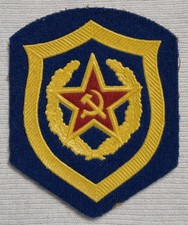
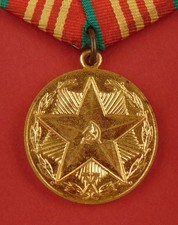
There were no official distinct SMERSH uniforms, badges, or insignia! They wore uniforms of General Staff personnel or of the units they were attached to. Thus, they generally wore uniforms of rifle troops (the same as worn by administrative personnel) except when attached to specific specialist units (air force, armour or artillery divisions, etc.). In reality the only known SMERSH collectibles are SMERSH related documents: SMERSH IDs, award documents with a SMERSH unit given as the awarding unit, or other such papers.
The VAST MAJORITY of such documents on the market are fakes! Beware. Search through the forum archives for more details on spotting fake documents.
Shawn